General Secretary and President To Lam’s visit to India: A partnership in challenging times
WVR - The upcoming state visit of General Secretary and President of Vietnam To Lam to India in May 2026 marks a milestone in Asian geopolitics. This is a high level mission occurring just over three months after Vietnam’s 14th National Congress of the Communist Party, signaling a strong continuity in Vietnam’s foreign policy pivoting toward strategic autonomy, stressed Vietnamese and Indian scholars. The World and Vietnam Report is pleased to introduce the article by Dr. Le Thu Mach from Ho Chi Minh National Academy of Politics and Dr. Shristi Pukhrem from India Foundation.
The foundation of trust in the BANI world
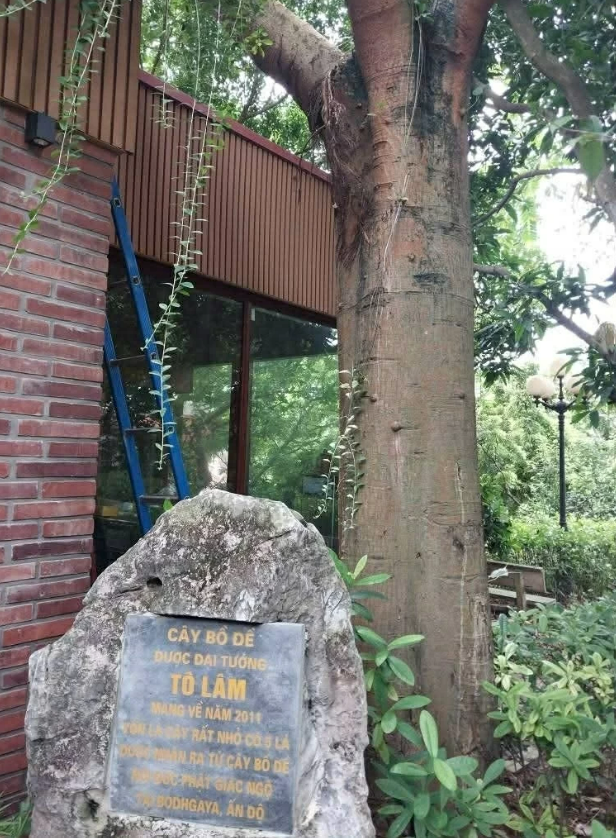
The relationship between H.E. To Lam and India is deeply rooted in both professional cooperation and cultural respect. His previous visits to India were in 2011, 2019 and 2023 as a leader of the Ministry of Public Security, building the cooperation for security and intelligence. After the visit in 2011, H.E. To Lam planted a Bodhi tree, a gifted brought from Bodh Gaya, at Phat Tich Pagoda in Bac Ninh (in the north of Vietnam). Indeed, Buddhism served as a profound symbol of the spiritual and cultural connection of the two nations.
As he visits to New Delhi in 2026, holding the consolidated position of General Secretary and President, he carries the spirit of a new developing era. This visit coincides with the 10th anniversary of the Comprehensive Strategic Partnership of Vietnam and India, a decade that has seen political trust reach an unprecedent height.
The global context of this visit is extreme complicated. With international conflicts persisting and the Strait of Hormuz remaining a blocked chokepoint, the world feels increasingly Brittle, Anxious, Non-linear, and Incomprehensible (BANI). In this environment, Vietnam has elevated Strategic Autonomy as its new guiding principle, as published in the documents of the 14th National Congress of the Communist Party.
For Vietnam, strategic autonomy is the evolution of its historic motto: Independence – Freedom – Happiness. India, with commitment to Atmanirbhar Bharat (Self-reliant India), is the natural partner for this vision. By tightening the bond with New Delhi, Hanoi is securing a stable position in a dynamic changing global landscape.
Converting political trust to economic growth
A critical question looms over this visit: can the two countries create a significant increase in bilateral trade and economics? While political and military training cooperation has been well established, economic exchange has still below the potentials of two of the world’s fastest-growing economies.
The signs for a breakthrough are promising. In January 2026, just three days after the 14th National Congress of Commnunist Party of Vietnam, a joint conference on “Opportunities and efforts of Vietnam and Indian in digital transformation” were organised in Hanoi. This aligns perfectly with Vietnam’s Resolution 57, which focuses on science, technology, and the digital revolution. Furthermore, the recent Indian Technical and Economic Cooperation (ITEC) training program on leadership in a BANI world for high-ranked officials from the Ho Chi Minh National Academy of Politics of Vietnam proves that the two nations are now synchronizing their governance mindsets.
In the state visit to India, Vietnam seeks a partnership in the Fourth Industrial Revolution. From semiconductor manufacturing to AI governance and digital infrastructure, India offers a model of development that could match Vietnam’s aspirations. This visit is a step into a new chapter of the traditional friendship, when it is the time for the old Bodhi tree bears the fruit of modern prosperity.
When Vietnamese General Secretary and President H.E. To Lam touches down in New Delhi on May 5, 2026, he will not merely be making a ceremonial stopover. His three-day State Visit to India, the first since his election as President in April arrives at a moment of rare geopolitical turbulence, making the occasion far more consequential than the diplomatic pleasantries that typically surround such visits.
The timing is deliberate and deeply symbolic. This year marks the 10th anniversary of the elevation of India-Vietnam ties to a Comprehensive Strategic Partnership, a milestone agreed upon during Prime Minister Narendra Modi’s visit to Vietnam in 2016. A decade on, the world has changed dramatically and so has the urgency for two like-minded, strategically positioned democracies to stand closer together.
A relationship rooted in history
India and Vietnam share civilisational threads that stretch back centuries be it Buddhist linkages, maritime trade, and a shared experience of colonial subjugation followed by hard-won independence. These historical bonds have provided a durable foundation upon which modern diplomatic, economic, and defence ties have been steadily constructed.
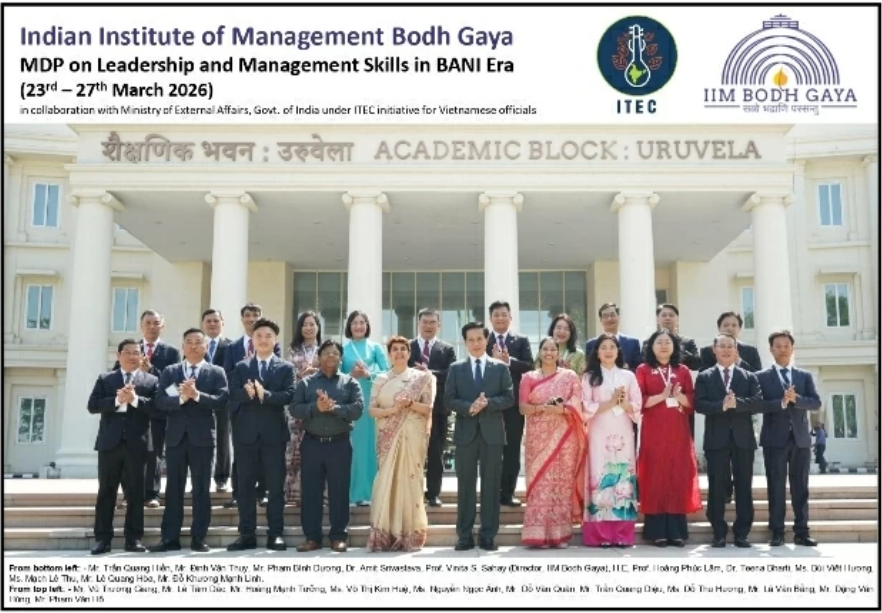
General Secretary and President To Lam's visit to India: Delegation from the Ho Chi Minh National Academy of Politics attends a leadership skills training program in India, March 2026.
General Secretary and President To Lam’s ceremonial welcome at the forecourt of Rashtrapati Bhawan on May 6 will be followed by wide-ranging discussions with Prime Minister Modi, a meeting with President H.E. Droupadi Murmu, and engagements with other senior Indian dignitaries. His itinerary also includes visits to Bodh Gaya and Mumbai, the former a nod to the deep Buddhist heritage connecting the two nations, the latter a signal of intent toward trade and business expansion.
A strong business delegation accompanying the President underscores that this visit is not merely about optics. It is about converting goodwill into commercial momentum.
Why this partnership matters now?
The global order is under stress. The rules-based international system faces challenges from multiple directions be it great power rivalry, supply chain fragility exposed by the pandemic, the weaponisation of trade, and an increasingly assertive forces in the South China Sea (East Sea of Vietnam). For both India and Vietnam, these are not abstract concerns. They are lived realities.
Vietnam, a frontline state in the contested South China Sea (East Sea of Vietnam), has long navigated the difficult waters of balancing sovereignty with economic dependence on its northern neighbour. India, for its part, faces its own complex equation along its Himalayan borders. Both nations understand, perhaps better than most, what it means to assert strategic autonomy in a world where the strong often rewrite the rules.
This is precisely why the India-Vietnam partnership holds such promise. Both are members of the Global South, both champion a multipolar world order, and both have skin in the game when it comes to freedom of navigation and an open, rules-based Indo-Pacific.
Pathways to a deeper partnership
To realise the full potential of this relationship, several avenues deserve focused attention.
Defence and security cooperation must deepen. India’s defence exports, including BrahMos missiles, should find their way to Vietnam. Expanding joint exercises, intelligence sharing, and maritime domain awareness particularly in the South China Sea (East Sea of Vietnam) would benefit both nations and contribute to regional stability.
Trade and investment remain below potential. Bilateral trade hovers around $15 billion, a figure that does not reflect the complementary strengths of the two economies. India's pharmaceutical, technology, and infrastructure sectors align well with Vietnam’s development needs, while Vietnamese manufacturing prowess fits neatly into India's supply chain diversification strategies.
Digital and clean energy cooperation offer frontier opportunities. As both nations accelerate their transitions to renewable energy and digital economies, co-investment in these sectors could become a defining pillar of the relationship.
People-to-people ties through education, tourism, and Buddhist cultural diplomacy can build the societal glue that sustains partnerships through political cycles.
Conclusion
General Secretary and President To Lam’s visit is more than a diplomatic milestone. It is an opportunity to reimagine what India-Vietnam cooperation can look like in a fractured world, one where shared values, strategic convergence, and mutual respect for sovereignty are not just talking points, but the architecture of a resilient partnership. As the two leaders meet in New Delhi, the message to the world should be clear: in uncertain times, like-minded nations must draw closer, and act with greater purpose.
By: Dr. Le Thu Mach (Ho Chi Minh National Academy of Politics) and Dr. Shristi Pukhrem (India Foundation)
- Share
- Copy
- Comment( 0 )
Cùng chuyên mục